
Clinical Pilates for Desk Workers: Improving Posture and Movement
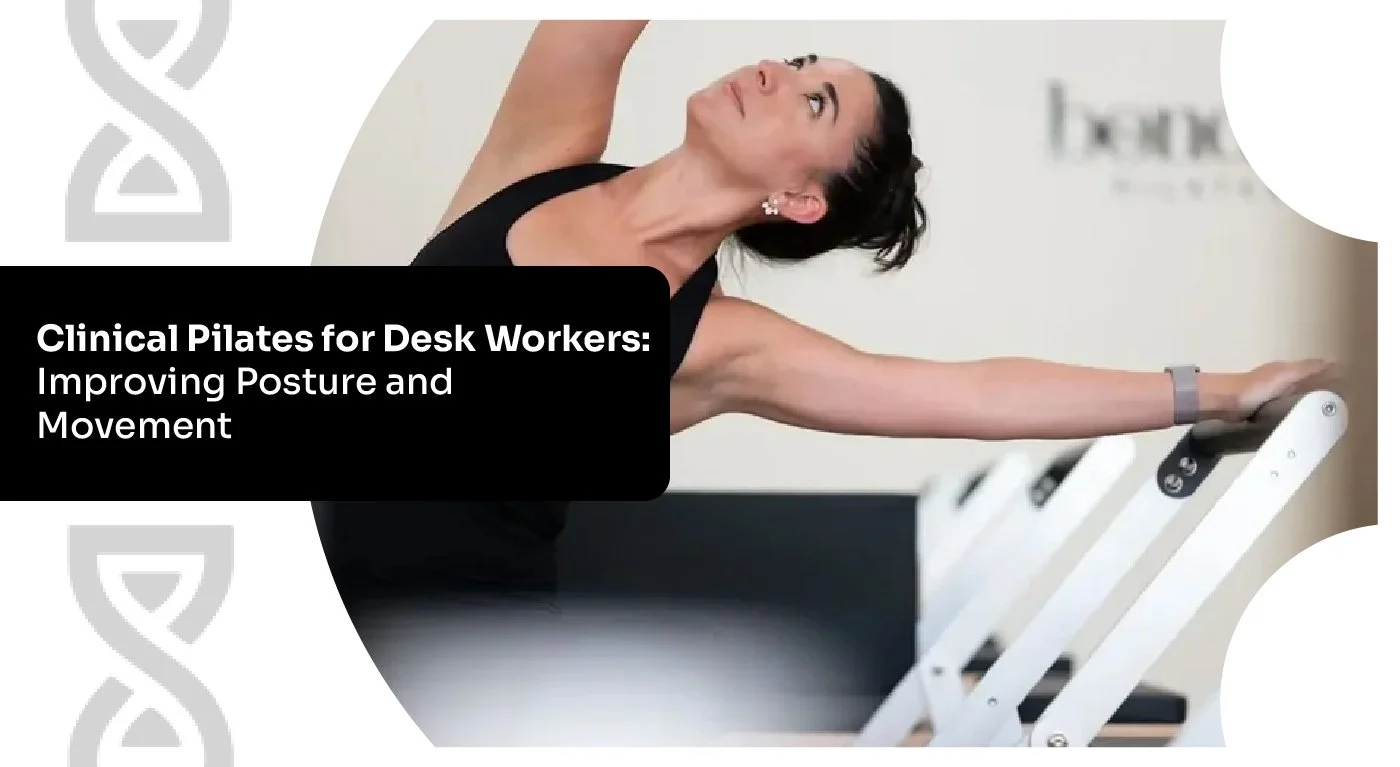
Modern work environments often require people to spend long hours sitting at a desk. While this may seem harmless, prolonged sitting can contribute to poor posture, muscle tightness, reduced mobility, and ongoing discomfort.
Many office workers experience neck tension, shoulder stiffness, lower back discomfort, and reduced movement quality as a result of sedentary work habits. Clinical Pilates offers a structured and personalised approach to addressing these challenges by improving posture, strengthening supporting muscles, and encouraging healthier movement patterns. If you're new to this exercise approach, understanding what Clinical Pilates is and how it works can provide valuable insight into its role in improving movement and physical wellbeing.
How Desk Work Affects the Body
Sitting for extended periods can place stress on multiple areas of the body.
Common issues include:
Rounded shoulders
Forward head posture
Tight hip flexors
Reduced spinal mobility
Weak core muscles
Over time, these imbalances can affect both comfort and movement efficiency.
Why Posture Matters
Posture influences how the body distributes load and moves throughout the day.
When posture becomes compromised, muscles and joints often compensate in ways that create unnecessary strain.
Improving posture can help:
Reduce muscular tension
Improve movement efficiency
Support spinal health
Enhance overall comfort
How Clinical Pilates Supports Better Posture
Clinical Pilates focuses on strengthening the muscles that support proper alignment while improving body awareness.
Sessions may include exercises designed to:
Improve core stability
Strengthen postural muscles
Increase mobility
Reduce movement compensations
This combination helps create more balanced and efficient movement patterns.
Book a session today and discover how clinical Pilates can support healthier movement.
Addressing Common Office Worker Complaints
Many people seek clinical Pilates support for issues such as:

Neck and Shoulder Tension
Poor workstation habits often place additional strain on the upper body.
Clinical Pilates can help improve shoulder stability and posture awareness.
Lower Back Discomfort
Weak core support and prolonged sitting frequently contribute to lower back issues.
Targeted exercises can help strengthen the muscles that support the spine.
Reduced Mobility
Stiff hips and limited spinal movement are common among desk workers.
Controlled movement exercises help restore flexibility and mobility safely.
The Benefits of a Personalised Approach
Every individual experiences different movement challenges. This is why a personalised program is often more effective than a general exercise class. Understanding why private Clinical Pilates sessions matter can help explain how tailored exercise programs address individual needs more effectively.
At Arena Clinical Pilates North Curl Curl, sessions are tailored to the client's:
Work demands
Physical condition
Movement limitations
Personal goals
This ensures exercises remain relevant and effective.
Testimonials
Small Changes Can Make a Big Difference
Improving posture is not about forcing the body into a perfect position.
Instead, it involves creating stronger movement habits and improving awareness throughout daily activities.
Clinical Pilates is suitable for a wide range of people, including office workers, active individuals, older adults, and those recovering from injury. Learn more about who can benefit from Clinical Pilates and how tailored programs can support different movement goals.
Conclusion
If you spend long hours sitting and are noticing increasing stiffness or discomfort, clinical Pilates may help improve how your body moves and feels.
Our personalised approach focuses on supporting posture, mobility, and long-term physical wellbeing.