
How to Return to Exercise After an Injury
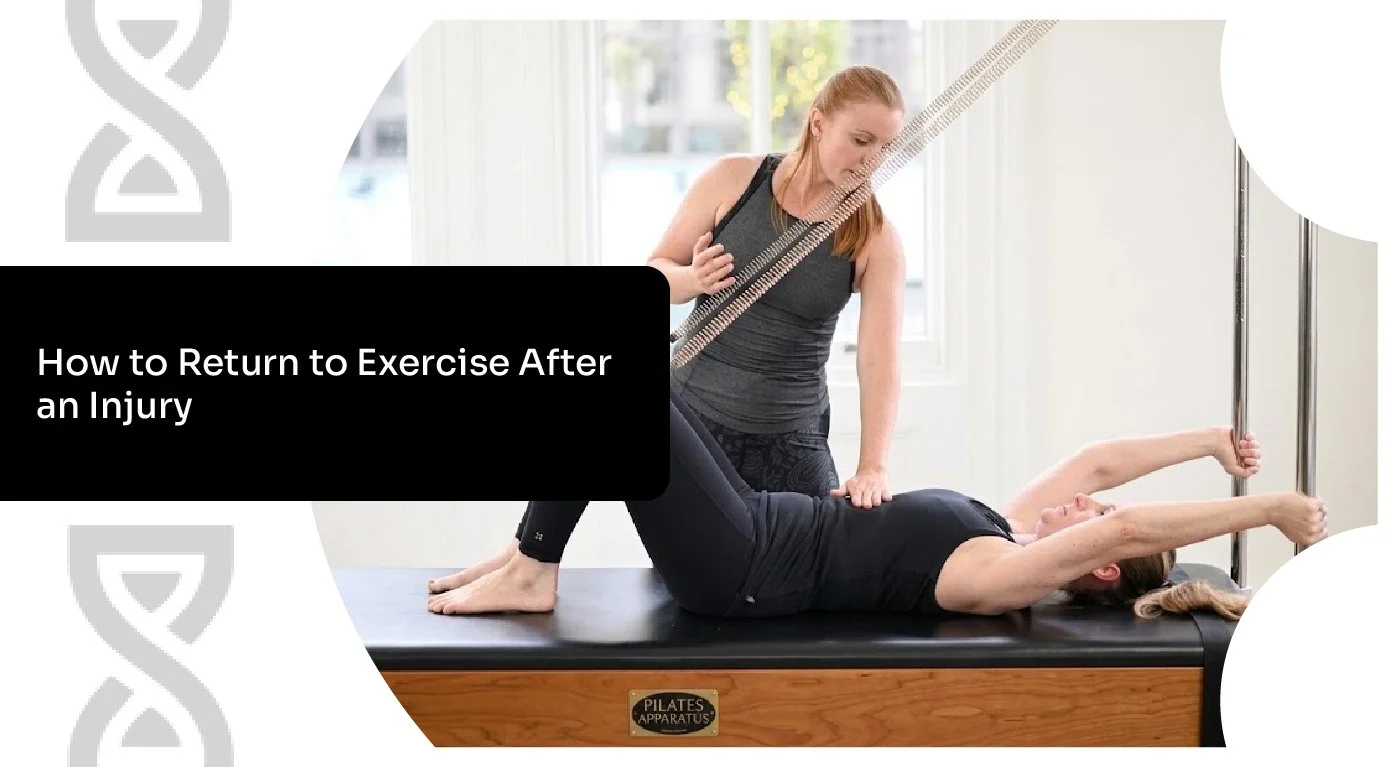
Returning to exercise after an injury can be difficult to judge. You may feel better and want to resume your normal activities, but feeling less pain does not necessarily mean the body is ready for its previous level of physical demand.
A safe return involves more than simply waiting for symptoms to disappear. Strength, mobility, balance, coordination and confidence all need to be considered. The right progression will also depend on the type of injury, how severe it was, your previous activity level and any advice provided by your healthcare professionals.
For people considering Pilates for Injury Recovery Northern Beaches, a personalised Clinical Pilates programme can provide a structured way to rebuild movement and physical capacity while gradually working towards everyday activities, exercise or sport.
Why Returning to Exercise Requires a Gradual Approach
After an injury, the body often changes the way it moves to protect the affected area. This can be useful during the early stages of recovery, but protective movement patterns can sometimes continue after the original injury has started to settle.
For example, someone recovering from a knee injury may unconsciously place more weight through the opposite leg. Someone with back pain may avoid certain movements and rely more heavily on other parts of the body.
These compensations can affect movement efficiency and may reduce strength or confidence over time.
A gradual return to exercise allows the body to adapt to increasing demands rather than going directly from reduced activity to full training.
The aim is not simply to exercise again. The aim is to restore the capacity needed to perform that exercise safely and confidently.
Pain Reduction Does Not Always Mean Full Recovery
Pain is an important signal, but it is only one part of the rehabilitation picture.
You may have less pain while still experiencing:
Reduced strength
Limited joint mobility
Poor balance
Reduced endurance
Muscle weakness
Changes in coordination
Fear of certain movements
This is particularly important for people returning to activities that place higher demands on the body.
Someone may be comfortable walking but still not have the strength or control required for running. Similarly, someone may be able to perform a basic squat but struggle with repeated squats, jumping or sport-specific movements.
This is why rehabilitation should consider function rather than pain alone.
The Main Stages of Returning to Exercise
Although every injury requires an individual approach, rehabilitation can generally be thought of as a progression from basic movement towards more demanding activity.
1. Restoring Comfortable Movement
The first priority is usually regaining comfortable, controlled movement within the limits recommended by your healthcare professional.
This may involve gentle mobility exercises, breathing, basic muscle activation or everyday movement.
The focus is on rebuilding confidence without unnecessarily loading the injured area.
2. Rebuilding Basic Strength
Once movement is better tolerated, strengthening becomes increasingly important.
Reduced activity can cause muscles to lose strength relatively quickly. Rebuilding this strength helps the body tolerate normal daily demands and prepares it for more challenging exercise.
Exercises should be selected according to the injury and current ability rather than simply choosing the most difficult variation.
3. Improving Stability and Coordination
Strength alone does not guarantee good movement.
The body also needs to coordinate different muscles and joints effectively. Balance and stability exercises can help improve control during activities such as walking, stepping, lifting and changing direction.
This stage can be particularly important for people returning to sport.
4. Increasing Exercise Capacity
As strength and control improve, the amount of work performed can gradually increase.
This might mean more repetitions, longer sessions, greater resistance or more complex movements.
The progression should be appropriate for the individual's recovery rather than based on an arbitrary timetable.
5. Returning to Normal Activities or Sport
The final stage involves preparing the body for the specific demands of everyday life, work, recreation or sport.
A runner may need to gradually rebuild impact tolerance. A golfer may need rotational control. Someone returning to manual work may need sufficient strength for lifting and carrying.
The closer rehabilitation gets to the person's real-world requirements, the more specific the exercises can become.
How Clinical Pilates Can Support Injury Rehabilitation
Clinical Pilates focuses on controlled movement, strength, stability and body awareness.
Unlike a standard exercise class where everyone follows the same programme, an individualised session can be adapted according to the person's current abilities and rehabilitation goals.
Depending on the situation, exercises may focus on:
Core control
Joint mobility
Postural awareness
Functional strength
Balance
Coordination
Controlled loading
Movement confidence
The exercises can also be modified as recovery progresses.
For someone who is initially unable to perform a particular movement comfortably, the exercise may begin with a simpler variation. As capacity improves, the movement can gradually become more demanding.
This is an important principle of Rehabilitation Pilates Northern Beaches: the programme should progress with the person rather than forcing the person to fit a fixed programme.
Why Individual Assessment Matters
Two people with the same injury may have very different rehabilitation needs.
Consider two people recovering from knee pain. One may have significant weakness after a period of inactivity, while another may have good strength but poor movement control. One may want to return to running, while the other simply wants to walk comfortably and manage daily activities.
Their programmes should not be identical.
An individual assessment can consider factors such as:
Injury history
Current symptoms
Movement limitations
Strength
Mobility
Balance
Previous activity
Lifestyle
Personal goals
This information helps determine where rehabilitation should begin and how it can progress.
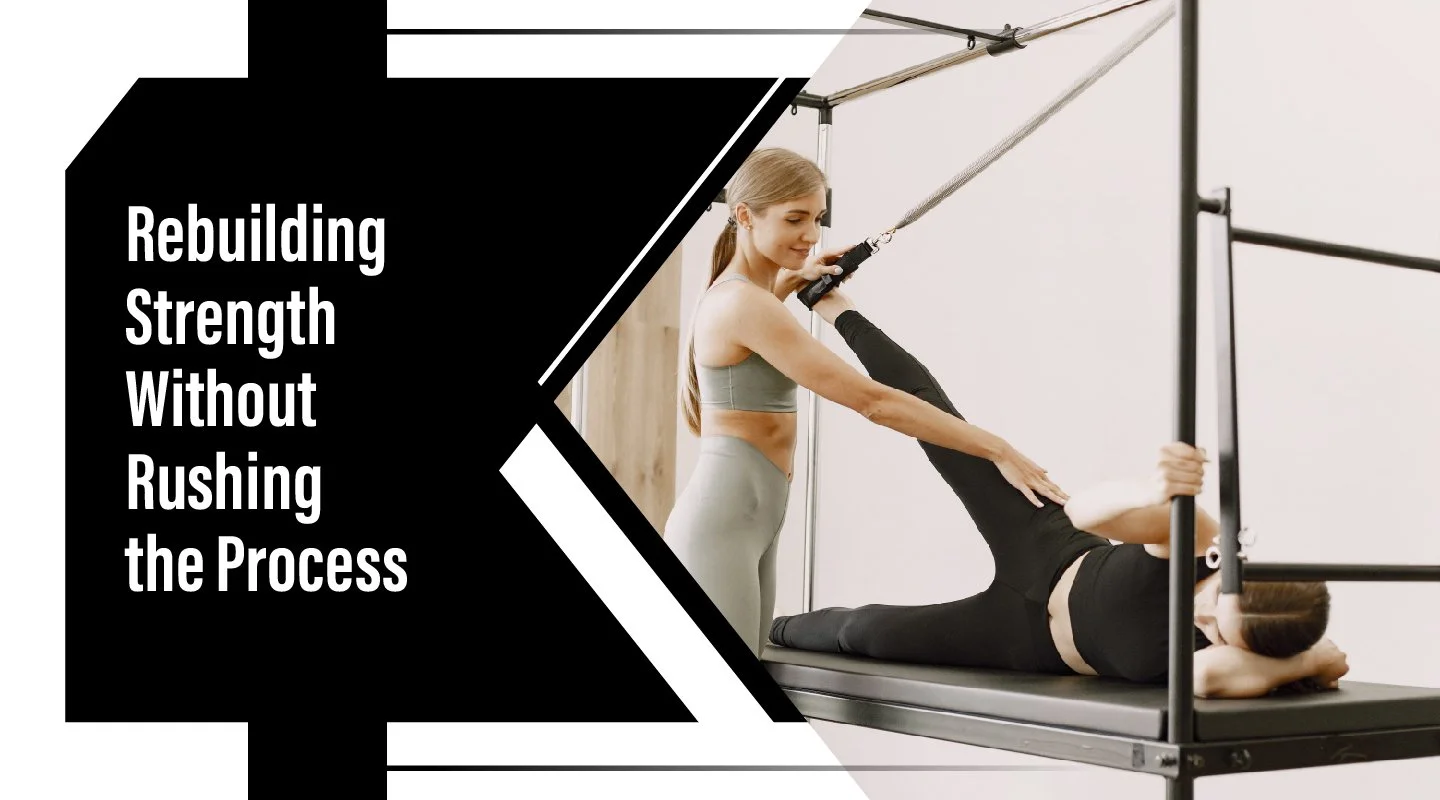
Rebuilding Strength Without Rushing the Process
One of the most common mistakes after an injury is trying to regain strength too quickly.
If the body has been inactive for several weeks, jumping immediately back into the previous training load can create excessive physical stress.
Progressive strengthening gives tissues and muscles time to adapt.
This does not mean rehabilitation should remain easy. Appropriate challenges are important. The key is finding a level that provides enough stimulus to encourage improvement without exceeding what the individual can currently tolerate.
As capacity improves, resistance, repetitions, range of movement and exercise complexity can be adjusted.
Testimonials
Mobility Is an Important Part of Recovery
Injury and inactivity can both affect mobility.
For example, someone recovering from an ankle injury may develop reduced ankle movement. A person with back pain may become reluctant to rotate or bend. After shoulder surgery, range of movement may be temporarily restricted.
Reduced mobility can influence how other parts of the body move.
A rehabilitation programme may therefore include controlled mobility exercises alongside strengthening. The objective is not to force a joint beyond its limits, but to progressively restore useful movement where appropriate.
Confidence Is Part of Rehabilitation
Physical recovery and psychological confidence often develop together.
After an injury, it is common to become cautious about movements that previously caused pain. Even after physical capacity improves, fear of reinjury can make someone hesitant to resume normal activities.
Gradual exposure to movement can help rebuild confidence.
Rather than immediately returning to demanding exercise, a person can practise progressively more challenging movements in a controlled environment.
This allows them to experience improvement and understand what their body can currently manage.
Returning to Sport Requires Specific Preparation
Returning to sport involves more than becoming generally fit again.
Different sports place different demands on the body.
A footballer may need acceleration, deceleration and directional changes. A tennis player requires rotation and rapid upper- and lower-body coordination. A runner needs the ability to tolerate repetitive impact.
For this reason, the later stages of rehabilitation should gradually reflect the demands of the person's chosen activity.
Clinical Pilates can provide a foundation of strength, stability and movement control, while sport-specific training can then build on that foundation.
When Should You Seek Professional Guidance?
Professional guidance is particularly important when recovering from a significant injury, surgery, persistent pain or a condition that has not been properly assessed.
You should seek appropriate medical or allied-health advice if you experience symptoms such as:
Persistent or worsening pain
Significant swelling
Loss of movement
Unexplained weakness
Numbness or tingling
Instability
Symptoms that interfere with normal activities
Clinical Pilates should complement appropriate medical care rather than replace diagnosis or treatment where these are required.
Frequently Asked Questions
How long should I wait before exercising after an injury?
There is no single timeframe. It depends on the injury, its severity, your recovery and professional medical advice. Some movement may be appropriate early, while higher-intensity activity may need to wait considerably longer.
Can Clinical Pilates help me return to sport?
It can form part of a broader rehabilitation programme by developing strength, mobility, balance and movement control. Sport-specific training should also be included when appropriate.
Should I exercise if I still have some pain?
That depends on the cause and nature of the pain. Persistent or unexplained symptoms should be assessed by an appropriate healthcare professional before progressing exercise.
Is rehabilitation only necessary after a major injury?
No. Even relatively minor injuries can lead to weakness, reduced mobility or altered movement patterns. The appropriate level of rehabilitation depends on the individual and their functional needs.
A Gradual Return Creates a Stronger Foundation
Returning to exercise after an injury should not be viewed as a race to get back to your previous routine. A well-managed recovery focuses on rebuilding the physical qualities needed to move confidently and tolerate increasing demands.
Strength, mobility, balance, coordination and confidence all have a role to play.
At Arena Clinical Pilates North Curl Curl, personalised programmes can support clients as they work through different stages of recovery. For those exploring Pilates Therapy Northern Beaches or Clinical Pilates Northern Beaches, the focus is on understanding individual needs and progressing movement appropriately.